Drainage failure is a prevalent issue for property owners in coastal suburbs like Bondi, where shifting sandy soils, saltwater corrosion, and aging infrastructure frequently compromise plumbing systems. Historically, rectifying a collapsed or severely intruded drainpipe necessitated intrusive excavation. This traditional "dig-and-replace" methodology often required the destruction of driveways, landscaped gardens, or even structural flooring to access the subterranean defect, resulting in significant restoration costs and extended disruption.
Advancements in trenchless rehabilitation have fundamentally changed how plumbing infrastructure is maintained. Today, Cured-in-Place Pipe (CIPP) technology allows for the structural restoration of damaged conduits from within the existing line. By utilising professional pipe relining Sydney services, homeowners can avoid the collateral damage associated with excavation. This case study details a specific project where GPS Gas Plumbing Services deployed no-dig technology to rehabilitate a critically blocked drain at a residential property in Bondi.
This report provides a comprehensive technical overview of the pipe relining methodology. We will examine the diagnostic process, the specific mechanics of the installation, and the long-term structural advantages of this solution compared to traditional plumbing repair methods.
The Problem: A Blocked Drain in Bondi
The residents of a Bondi property contacted our team to investigate a recurring failure in their sewer system. Despite previous attempts to clear the line, the symptoms had escalated from minor inconveniences to critical system failures. The reported issues included:
- Hydrostatic Backflow: Wastewater surfacing in ground-floor toilets and sink basins, indicating a severe downstream obstruction.
- Reduced Drainage Velocity: Significant delays in water draining from shower trays and baths.
- Auditory Indicators: Distinct gurgling sounds within the pipework, caused by trapped air displaced by backing-up water.
Initial DIY efforts using caustic chemical agents and manual plungers proved ineffective. The obstruction had become absolute, leading to external sewage overflow—a situation presenting immediate sanitation risks and potential environmental contamination.
A primary concern for the client was the preservation of their property's aesthetics. The affected pipe ran directly beneath a recently paved entertainment area and an established garden. A conventional excavation approach would have necessitated the demolition of these hardscapes, incurring restoration costs that likely exceeded the plumbing repair itself.
Our Inspection Process With Modern Technology
Accurate diagnosis is the cornerstone of trenchless repair. We initiated the project with a comprehensive Closed-Circuit Television (CCTV) inspection. By feeding a high-definition, self-leveling camera into the drain, we were able to visualize the internal topography of the pipe and identify the root cause of the failure.
The diagnostic footage revealed:
- Severe Root Intrusion: Dense tree root masses had infiltrated a 6-meter section of the earthenware pipe.
- Multiple Fracture Points: The aging clay pipes exhibited longitudinal cracks and displaced joints, allowing soil and roots to enter the flow path.
- Structural Deformation: A partial collapse in the line was restricting flow capacity and creating a catch-point for solid waste.
- Mechanical Failure: The structural integrity was so compromised that mechanical snaking would likely have caused a total collapse.
Based on the severity of the fractures and the location of the pipe, we determined that relining was the optimal solution. Unlike temporary clearing, this approach would restore structural integrity. We deployed our specialized team for emergency pipe relining solutions in Sydney to address the issue immediately without breaking ground.
Why We Chose Pipe Relining
For this specific site in Bondi, trenchless relining offered superior technical and economic advantages over traditional replacement methods:
- Asset Preservation: The process is conducted entirely through existing access points, eliminating the need to demolish walls, remove pavers, or uproot vegetation.
- Structural Longevity: The epoxy resin liner cures to form a monolithic pipe with a design life exceeding 50 years, often outlasting new PVC installations.
- Impervious to Intrusion: The seamless nature of the liner eliminates joints, which are the primary entry points for aggressive tree roots.
- Operational Efficiency: Installation and curing are typically completed within a single day, whereas excavation can span several days or weeks.
- Total Cost Efficiency: While the upfront pipe relining cost in Sydney is competitive, the total savings are substantial when factoring in the elimination of landscape restoration and hardscape repairs.
The client approved the trenchless approach, prioritising the protection of their landscape architecture and the guarantee of a permanent fix.
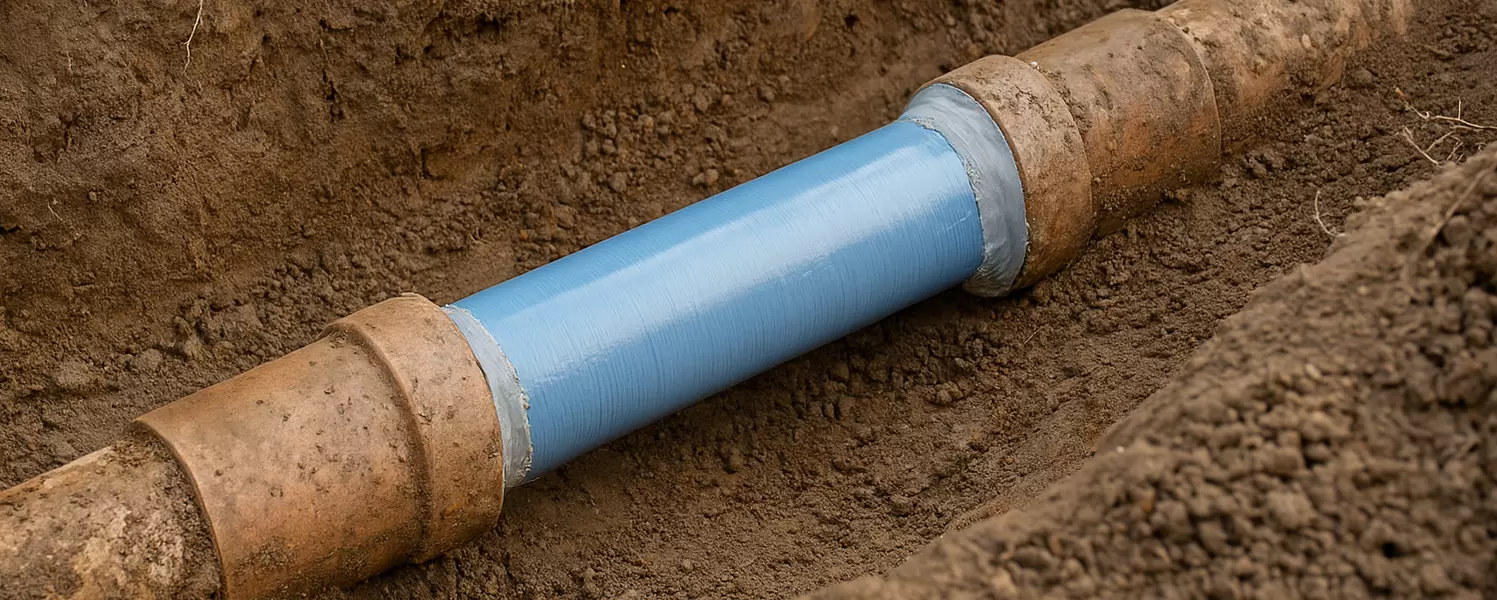
How We Relined a Blocked Drain in Bondi Without Digging
The execution of a relining project follows a strict protocol to ensure adhesion and structural strength. This process is critical for effective blocked drains Sydney remediation. Below is the technical breakdown of the procedure used.
Step 1: High-Pressure Hydro-Jetting
Before a liner can be installed, the host pipe must be returned to its original diameter. We utilised high-pressure water jetting (hydro-jetting) to scour the internal walls, pulverising the invading tree roots and flushing out accumulated scale and debris. This creates a clean surface essential for the resin to bond correctly.
Step 2: Secondary CCTV Verification
Following the cleaning phase, a secondary camera inspection was performed. This verified that all obstructions were removed and allowed us to measure the exact positioning of the cracks and the total length of the required liner.
Step 3: Liner Calibration and Impregnation
We cut a textile liner to the precise 6-meter length required. This liner was then impregnated with a two-part epoxy resin mixture. A calibration roller was used to ensure the resin was evenly distributed throughout the fabric, guaranteeing uniform thickness and strength.
Step 4: Inversion and Inflation
Using an inversion drum and compressed air, the resin-saturated liner was blown into the existing drain. An internal calibration bladder was then inflated inside the liner. This air pressure forced the liner against the walls of the old clay pipe, locking it into place and filling the cracks with resin.
Step 5: Curing Process
The liner was left under constant pressure to cure. During this phase, the resin undergoes an exothermic reaction, hardening into a structurally independent pipe. The curing time varies based on ambient temperature and resin type but typically concludes within a few hours.
Step 6: Final Quality Assurance
Once cured, the inflation bladder was deflated and retrieved. A final CCTV inspection was conducted to verify the quality of the installation. The result was a smooth, joint-free pipe-within-a-pipe, completely sealing the previous defects.
By strictly adhering to these trenchless protocols, we delivered a root-proof, watertight, and load-bearing new pipe without excavating a single spade of soil.
The Results: Drain Got Clear And New
By the conclusion of the operation, the hydraulic function of the Bondi property’s drainage system was fully restored. The relined section now boasts a friction coefficient superior to the original clay, promoting better flow rates and self-cleaning velocities.
The client successfully avoided the disruptive excavation process. The garden, paving, and outdoor entertainment areas remained pristine, saving thousands of dollars in potential landscaping remediation. Crucially, the homeowner gained peace of mind knowing the repaired section is now backed by a 50-year structural life expectancy, effectively eliminating the risk of future root intrusion in that zone.
Customer Reaction
“When the drains at my Bondi home began backing up, I anticipated a nightmare scenario. I was genuinely concerned that the repair would necessitate digging up the garden and driveway, a process that induced significant stress. When the technical team from GPS Gas Plumbing Services outlined the pipe relining methodology, I was relieved yet cautiously optimistic about the efficacy of a no-dig solution.
The execution exceeded my expectations. The entire project was completed rapidly with zero physical disruption to the property. There was no excavation mess, no trenches, and no extended downtime—just a seamless, professional intervention. Knowing that the pipes are now structurally superior and warrantied for decades is reassuring. I would unreservedly recommend pipe relining to any property owner facing complex drainage issues.”
Key Benefits of Pipe Relining
This case study highlights the distinct advantages of trenchless rehabilitation for modern property maintenance:
- Zero Excavation: Preserves surface infrastructure, including driveways, retaining walls, and established flora.
- Superior Durability: The cured resin creates a structural repair often stronger than the host pipe, resistant to corrosion and wear.
- Rapid Turnaround: Most residential relining projects are completed within one day, minimizing household disruption.
- Environmental Minimalisation: Reduces waste generation and prevents soil ecosystem disturbance associated with digging.
- Improved Hydraulics: The seamless finish eliminates joints and rough surfaces, improving flow and preventing snagging points.
- Economic Protection: Avoids the hidden "make-good" costs of repairing landscaping and concrete after plumbing work.
For homeowners in mature suburbs like Bondi, where properties often feature established gardens and limited access, pipe relining represents the most logical and effective approach to sewer rehabilitation.
Conclusion
The successful rehabilitation of the drainage system in this Bondi residence demonstrates the efficacy of trenchless technology in resolving complex infrastructure failures. Through the strategic application of pipe relining, we restored the integrity of the sewer line without the financial and aesthetic costs of traditional excavation. Our integrated approach, combining hydro-jetting, CCTV diagnostics, and structural relining, ensures a comprehensive repair.
The result is a drain that performs with the efficiency of a new installation, fortified against future environmental stresses. This method provides a permanent resolution to persistent blockages, safeguarding both the property's value and the homeowner's comfort.
Property owners should not assume that major drainage failure inevitably requires destructive digging. If you are experiencing symptoms such as slow drainage, foul odours, or gurgling pipes, trenchless technology offers a viable, non-intrusive alternative. For expert assessment and to get your blocked drains Sydney cleared efficiently, contact our specialized team.