Stormwater drainage systems are critical for diverting rainwater away from a property’s foundation and landscaping. When these pipes become obstructed by soil, organic debris, or root intrusion, the resulting hydrostatic pressure can lead to slow drainage, localized flooding, and significant structural water damage. Unlike sanitary sewers, stormwater lines often lack easy access points, making blockage removal a unique challenge. This comprehensive guide outlines the technical causes of obstruction, actionable DIY remediation strategies, and the advanced methodologies employed by licensed professionals.
Understanding the Causes of Stormwater Pipe Blockages
Stormwater infrastructure differs from sewer systems in that it is designed to manage high-volume, rapid flow rather than solids. Blockages typically stem from environmental factors rather than misuse:
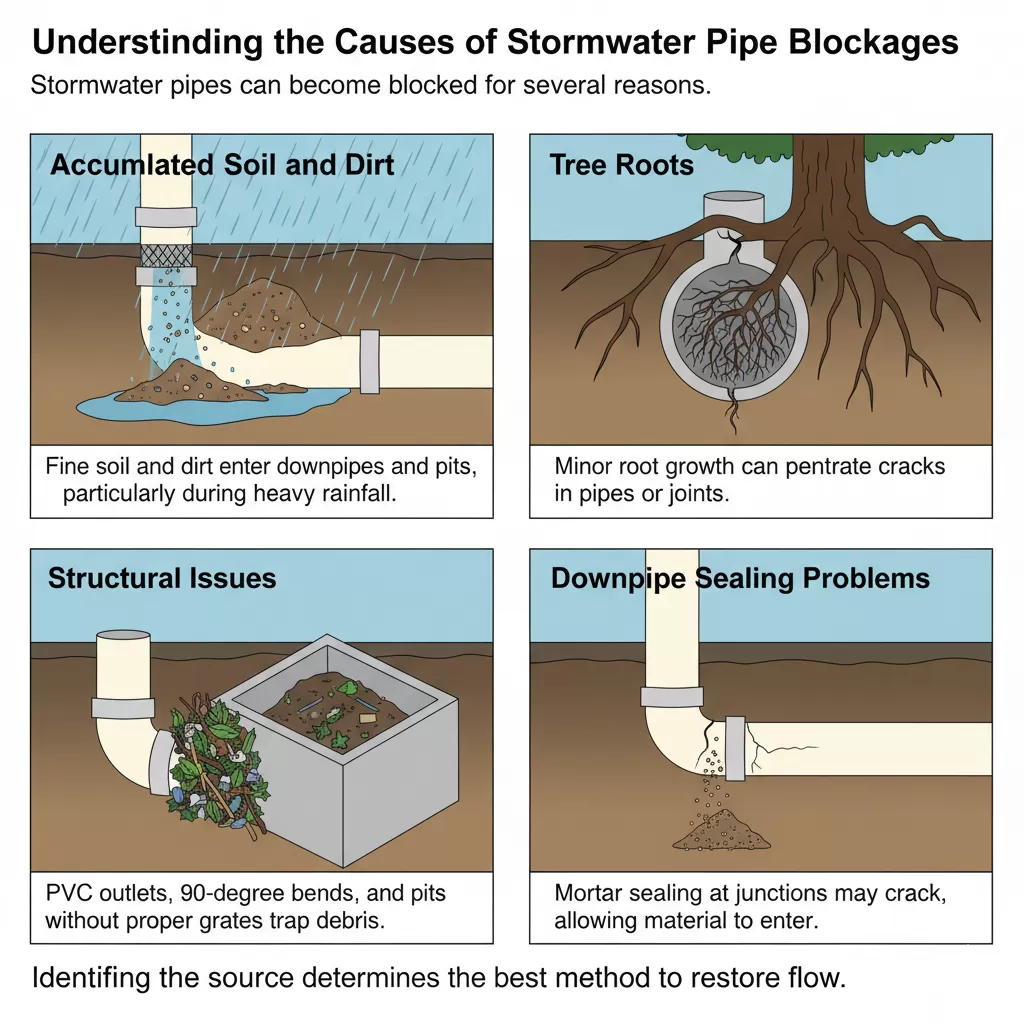
- Sedimentation and Silt Accumulation: During heavy rainfall, surface runoff carries fine silt, sand, and soil into downpipes and pits. Over time, this sediment settles in the "invert" (bottom) of the pipe, reducing flow capacity until a complete plug forms.
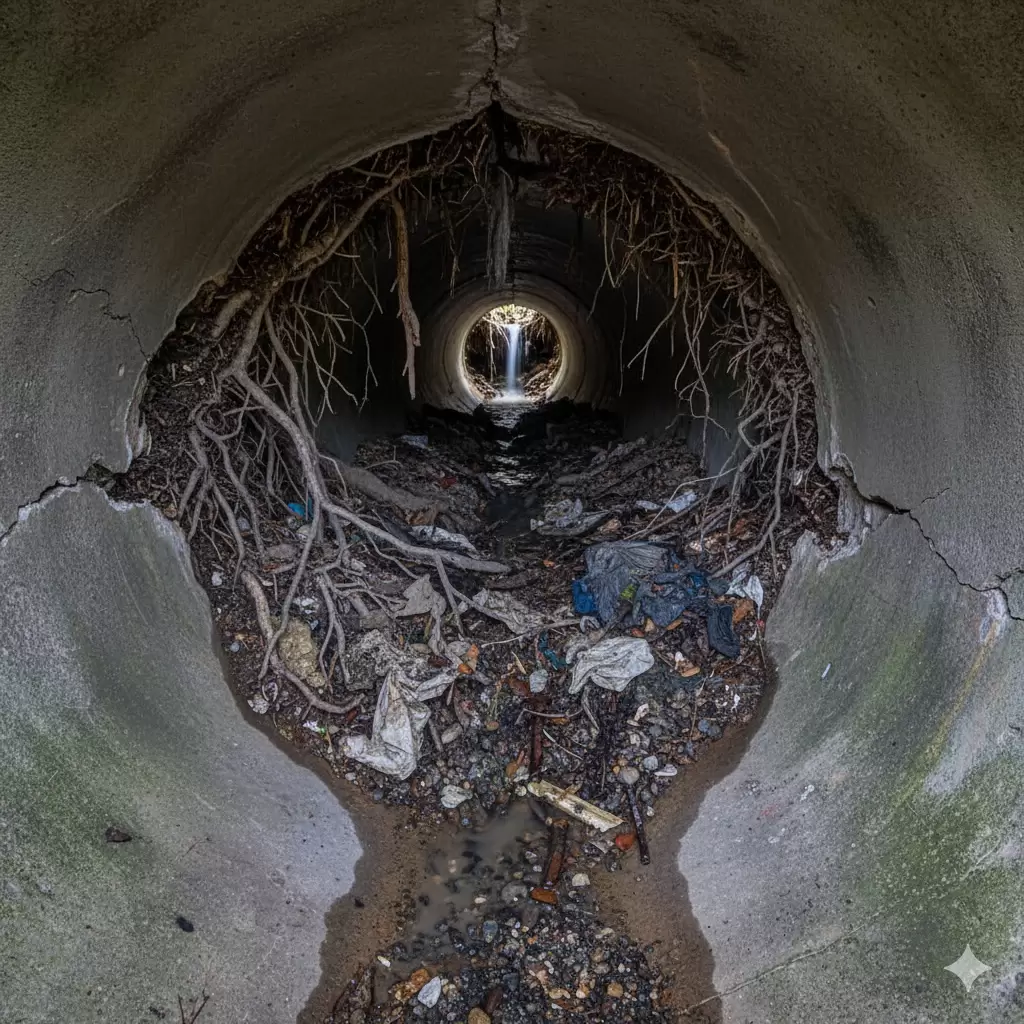
- Botanical Intrusion (Tree Roots): Tree roots naturally seek moisture (hydrotropism). They enter pipes through microscopic hairline cracks or unsealed joints. Once inside, they proliferate rapidly, creating a net that catches debris and eventually fractures the pipe.
- Hydraulic Engineering Flaws: Poorly designed systems with insufficient fall (gradient), excessive 90-degree bends, or lack of expansion joints are prone to trapping debris. Uncovered catchment pits are particularly vulnerable to filling with leaf litter.
- Structural Compromise: Ground movement can cause pipe sections to misalign (displace), creating a "lip" that catches debris. Additionally, degradation of mortar seals at downpipe junctions allows foreign material to bypass grates and enter the subterranean line.
Accurately diagnosing whether the blockage is soft (silt/leaves) or hard (roots/collapsed pipe) is the first step in selecting the correct clearance method.
DIY Approaches to Clear a Clogged Stormwater Pipe
Homeowners can often resolve shallow or soft blockages using accessible tools. However, caution must be exercised to avoid compacting the blockage further or damaging PVC infrastructure.
1. Hydro-Mechanical Clearing (Mop and Hose Technique)
For blockages located near a stormwater pit or opening caused by soft silt:
- Create a Seal: Insert a standard mop head into the pit outlet to act as an improvised plunger. The fabric creates a temporary seal against the pipe walls.
- Apply Kinetic Force: Use a vigorous plunging motion. This push-pull action creates alternating pressure and vacuum forces, which can disturb compacted sediment.
- Hydraulic Flushing: Once movement is detected, introduce a garden hose at full pressure to scour the loosened debris. This is effective only if the water has a path to exit; otherwise, it may back up.
limitation: This method relies on water volume and is generally ineffective against root masses or solid obstructions located deep within the network.
2. Mechanical Extraction (Drain Snake or Wire Auger)
When hydrostatic pressure fails, physical agitation is required. Manual and power-assisted augers can reach deeper into the line:
- Manual Augers (e.g., Kinetic 6mm x 6m): These thin, flexible cables are designed to navigate standard bends. They are best suited for pulling back clumps of leaves or hair-like root masses in smaller branch lines.
- Drill-Powered Augers: Attaching an auger to a cordless drill (such as an 18V platform) increases rotational torque. This rotation helps the coil "screw" into the blockage rather than just pushing against it.
- Technique: Feed the cable slowly until resistance is felt, then rotate the auger to hook the debris. Retract slowly to remove the material.
- Final Flush: Always follow mechanical clearing with a water flush to remove the remaining particulates.
Warning: Forcing an auger past a tight bend or into a collapsed pipe can cause the tool to become permanently stuck. If the tool binds, do not force it.
3. Diagnostic Inspection Cameras
Visual confirmation is superior to guesswork. Inexpensive consumer endoscopes or inspection cameras have become standard diagnostic tools:
- Identify the obstruction: A camera can confirm if the issue is a simple clog, a toy/object, or a crushed pipe.
- Locate the failure: Many units provide distance metrics, allowing you to measure exactly how far down the line the problem lies.
- Prevent unnecessary damage: Knowing there is a tree root allows you to stop using a manual snake that cannot cut it, saving time and effort.
4. Site Management During Maintenance
- Pit Security: While working, ensure open pits are covered with temporary mesh to prevent loose gravel or tools from falling in and creating a secondary blockage.
- Debris Containment: When repairing mortar joints or downpipe connections, use a plywood shield or plastic tarp at the base to catch falling mortar, which solidifies underwater and is extremely difficult to remove.
When to Seek Professional Help
Certain scenarios exceed the capabilities of consumer hardware. Professional plumbers utilize industrial-grade technology to resolve complex infrastructure issues:
- High-Pressure Water Jetting (Hydro-Jetting): Unlike a garden hose, hydro-jets operate at pressures up to 5,000 PSI. This scours the interior pipe walls, cutting through tree roots and pulverizing hardened scale and silt.
- CCTV Drain Inspection and Location: Professionals use self-leveling cameras with sonde transmitters. This allows them to not only see the damage but to use a receiver above ground to pinpoint the exact location and depth of the break, minimizing excavation.
- Excavation and Relining: If a pipe is collapsed or bellied (sagging), no amount of cleaning will fix it. Professionals can excavate to replace the section or use trenchless relining technology to create a new pipe within the old one.
Professional intervention is legally required in many jurisdictions for works involving council connection points and ensures compliance with Australian Standards (AS/NZS 3500).
Preventive Measures to Avoid Future Clogs
Proactive maintenance of stormwater assets significantly reduces the risk of emergency overflow events:
- Filtration at the Source: Install "leaf eater" rain heads or mesh guards on all gutters and downpipes to prevent organic matter from entering the subterranean system.
- Hydraulic Maintenance: Regularly flush the lines with high-volume water (e.g., during dry spells) to keep silt mobile and prevent it from solidifying in the pipe invert.
- Root Management: Map the location of pipes relative to large trees. Install root barriers or schedule annual root cutting to protect the pipe joints.
- Structural Integrity Checks: Inspect mortar haunching around pits and downpipe shoes. Re-point cracked mortar immediately to stop soil ingress.
- Scheduled Professional Jetting: For properties with known root issues, an annual preventative jetting service is often cheaper than emergency excavation repairs.
Tools and Equipment Overview
| Tool / Equipment | Mechanism of Action | Best Use Case |
|---|---|---|
| Heavy Duty Mop | Hydraulic Piston / Suction | Dislodging soft surface silt in pits |
| Garden Hose | Low-Pressure Flush | Moving loose debris after mechanical clearing |
| Manual Wire Auger | Mechanical Hooking | Retrieving leaves/hair from shallow bends |
| 6mm x 6m Auger | Flexible Navigation | Reaching mid-distance blockages in 90mm pipe |
| Cordless Drill Auger | Rotational Torque | Drilling through denser sediment plugs |
| Inspection Camera | Visual Diagnostics | Verifying root intrusion or pipe collapse |
| Hydro-Jet (Pro) | High-Pressure Scouring | Cutting roots and cleaning pipe walls |
| Protective Sheeting | Debris Isolation | Preventing contamination during repairs |
DIY vs Professional Services
- DIY Suitability: Best for surface-level blockages, clearing silt from pits, and maintaining gutters. It is cost-effective but limited by reach and power.
- Professional Necessity: Essential for deep-system blockages, hard root intrusions, crushed pipes, or when local council mains are involved. Professional work carries warranties and utilizes trenchless technologies not available to consumers.
Attempting to clear a severe blockage with inadequate tools can result in the auger cable snapping inside the drain, turning a cleaning job into an expensive excavation project.
Final Recommendation
Stormwater systems are vital for property protection. If you are encountering persistent water pooling, cannot locate the blockage with standard tools, or require structural repair to the pipe network, GPS Gas Plumbing Services provides expert diagnostic and remediation solutions. Their team utilizes advanced CCTV profiling and high-pressure jetting to restore system integrity efficiently.