
Water heating constitutes one of the most significant energy expenditures for modern households, often accounting for a quarter of a home's total energy consumption. Daily necessities such as bathing, laundry, and sanitation demand a consistent thermal supply. While traditional reliance on grid electricity and natural gas remains common, these methods are increasingly costly and carbon-intensive. A solar hot water system offers a sophisticated alternative, engineering a way to harness abundant thermal radiation to fulfill domestic needs.
Solar thermal technology represents the intersection of economic foresight and environmental stewardship. By converting sunlight into thermal energy, homeowners can drastically reduce their reliance on utility providers. Below is a comprehensive technical analysis of how these mechanisms function, the specific recommendations from a Trusted & Reliable Plumber in Sydney, and the data-driven reasons driving the global shift toward solar thermal adoption in 2026.
What is a Solar Hot Water System?
A solar hot water system, technically known as a solar thermal system, is distinct from solar photovoltaic (PV) power. While PV panels convert sunlight into electricity, solar thermal systems capture solar radiation to heat a fluid directly. This thermodynamic process captures thermal energy and transfers it to a storage vessel, providing domestic hot water (DHW) for the property. The architecture of these systems generally includes four primary components: solar collectors, a heat transfer mechanism, a storage cylinder, and an auxiliary booster.
The collectors are typically mounted on a north-facing roof (in the Southern Hemisphere) to maximize exposure. As sunlight strikes the absorber plates within the collectors, it heats a fluid—either potable water in direct systems or a glycol-based antifreeze in indirect systems. This heated fluid circulates to the storage tank, raising the water temperature. To ensure reliability during periods of low solar irradiance, such as overcast days or high night-time demand, an integrated auxiliary heater (electric or gas) engages automatically to maintain the desired temperature.
Solar water heating configurations are broadly categorized into two operational architectures: active and passive. Active systems utilize electronic controllers and pumps to circulate the heat transfer fluid, offering precision and efficiency. Passive systems rely on the physics of convection and gravity (thermosiphon effect) to move water. The optimal choice depends on structural variables, local climate conditions, and specific hot water load requirements.
How Solar Hot Water Systems Work
The thermodynamic cycle begins at the solar collectors, which are typically designed as either flat-plate collectors or evacuated tubes. Flat-plate collectors are robust and ideal for moderate climates, while evacuated tubes feature a vacuum seal that minimizes heat loss, making them superior in colder regions or for high-efficiency requirements. In an indirect system, the collectors heat a non-freezing fluid (such as propylene glycol) which circulates through a closed loop.
This superheated fluid flows into a heat exchanger usually located inside or wrapped around the storage tank. Through conductive heat transfer, the thermal energy passes from the fluid to the potable water stored in the tank, without the two liquids ever mixing. In direct systems, the domestic water itself is cycled through the collectors, which is efficient but susceptible to freezing in harsh environments.
System redundancy is managed by the thermostat and booster element. If the tank temperature drops below a set threshold (typically 60°C for legionella control) and solar gain is insufficient, the backup energy source activates. This hybrid approach guarantees a continuous supply of hot water regardless of weather conditions.
Types of Solar Hot Water Systems
Understanding the distinction between circulation methods is critical for selecting the right infrastructure for a property.
Active (Pumped) Systems usually feature split-system architecture. The tank is installed at ground level, while the collectors are on the roof. A circulating pump, controlled by temperature sensors, moves the fluid between the two. These systems are aesthetically superior as the heavy tank is hidden, and they offer higher efficiency in colder climates where "frost protection" valves or glycol loops are necessary to prevent pipe damage.
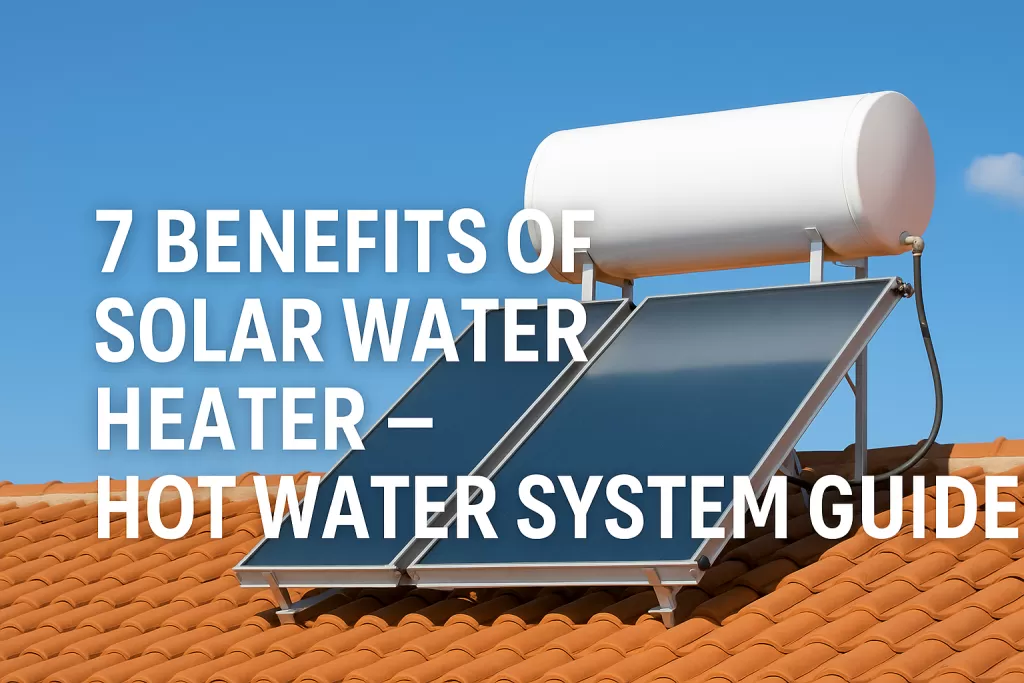
Passive (Thermosiphon) Systems rely on the principle that hot water rises. In this "close-coupled" design, the tank is mounted horizontally on the roof immediately above the collectors. As the water in the collectors heats up, it naturally rises into the tank, displacing cooler water which flows down to be heated. These systems have no moving parts, reducing mechanical failure risks, but require significant roof structural reinforcement due to the weight of the water.
Engineering selection criteria include the available roof pitch, orientation, and structural load-bearing capacity. Large executive homes may require the high-recovery rates of active systems, whereas smaller dwellings in temperate zones often find passive systems to be a cost-effective, zero-energy-input solution.
7 Benefits of Solar Water Heater
1. Saving Money on Your Energy Bills
The primary economic driver for solar thermal adoption is the drastic reduction in operating costs. A properly sized system can meet 50% to 90% of a household's hot water demand using free solar energy. Given that water heating is a dominant load on utility bills, shifting this consumption to solar sources essentially insulates the homeowner from volatility in electricity and gas markets.
Financial analysis shows that while the capital expenditure (CapEx) for installation is higher than standard electric storage units, the operational expenditure (OpEx) is negligible. The "free" energy generated daily translates to immediate monthly cash flow improvements. Over the system's lifespan, these cumulative savings often exceed the initial investment multiple times over.
Return on Investment (ROI) varies based on consumption patterns and local energy tariffs. However, with 2026 energy prices remaining high, the payback period has shortened significantly. Households replacing inefficient electric resistance heaters see the fastest ROI, often recovering their costs within 3 to 5 years.
2. Low Maintenance Requirements
Solar thermal systems are renowned for their mechanical simplicity. Unlike heat pumps which utilize compressors and refrigerants, solar systems have fewer moving parts, reducing the frequency of component failure. Passive systems, in particular, are virtually maintenance-free regarding mechanical operation.
Standard maintenance protocols are infrequent but necessary for longevity. A professional service is recommended every 3 to 5 years to inspect the sacrificial anode (which prevents tank corrosion), check the pressure relief valves, and ensure the heat transfer fluid (in indirect systems) has not degraded. This low-touch maintenance schedule appeals to homeowners seeking "set and forget" infrastructure.
With quality components—such as copper collectors and stainless steel or vitreous enamel tanks—these systems are built to endure harsh UV exposure and weather extremes. It is common for high-quality solar collectors to remain operational for over 20 years.
3. Eco-Friendly Water Heating
Transitioning to solar hot water is a high-impact decarbonization strategy. A typical electric water heater powered by a coal-heavy grid can generate tonnes of greenhouse gas emissions annually. By substituting this load with zero-emission solar energy, a single household significantly reduces its carbon footprint.
Solar thermal energy is strictly renewable. It does not deplete natural resources or produce toxic byproducts during operation. Even when the auxiliary booster is required, the total energy demand is a fraction of what a standard system requires. This aligns residential properties with global sustainability targets.
For environmentally conscious homeowners, this technology offers a tangible contribution to mitigating climate change, reducing demand on fossil-fuel power plants during peak times.
4. Energy Independence
Energy security involves reducing reliance on external infrastructure. Solar hot water systems decentralize energy production, allowing homeowners to generate thermal energy on-site. This autonomy is particularly valuable in an era of fluctuating utility prices and grid instability.
By harvesting solar radiation, you effectively "lock in" the price of your energy (which is free) for the next two decades. This provides a hedge against inflation in the energy sector. When combined with solar PV for electricity, a home can approach near-total self-sufficiency.
This independence provides psychological and financial peace of mind, transforming a home from a resource consumer into a resource generator.
5. Adds Value to Your Home
Energy efficiency is a key determinant in modern property valuations. Prospective buyers in 2026 are acutely aware of running costs and building efficiency ratings. A functioning solar hot water system improves a home's energy rating (such as NatHERS in Australia), making it a more attractive asset on the real estate market.
The presence of green infrastructure signals to buyers that the property has been modernized and maintained. It represents a future cost saving for the buyer, which can justify a premium on the sale price. Real estate data consistently suggests that homes with renewable energy systems sell faster and for higher prices than comparable non-solar properties.
Even for homeowners with no intention to sell, the increase in equity is a beneficial financial side effect of the installation.
6. Long Lifespan
Durability is a core feature of solar thermal engineering. While standard gas or electric water heaters typically require replacement every 8 to 12 years due to thermal stress and corrosion, solar systems are designed for a longer service life. The collectors, usually made of tempered glass and copper, are built to withstand hail and extreme heat.
This extended lifespan improves the life-cycle cost analysis of the system. Instead of purchasing two or three standard units over a 25-year period, a homeowner may only need one solar system with minor component maintenance.
Investing in longevity reduces waste sent to landfills and ensures that the capital investment continues to yield returns for decades.
7. Reliable Hot Water Supply
A common misconception is that solar water heaters only work when the sun is shining. In reality, these systems are designed as hybrid units with integrated storage and backup capability. The large insulated tank acts as a thermal battery, preserving hot water generated during the day for use at night or early morning.
Should the stored water temperature drop due to extended cloudy periods or high usage, the automated booster (gas or electric) triggers immediately to bridge the gap. This seamless transition ensures there is no interruption in comfort. You will not require an Emergency Plumber in Sydney for lack of hot water, as the system redundancy is built-in.
This dual-energy approach provides the reliability of a traditional system with the efficiency of a renewable one, ensuring consistent performance 24/7/365.
How Rebates and Incentives Help Lower the Cost
Governments recognize the role of solar thermal in reducing grid load and carbon emissions. Consequently, financial incentives remain a crucial factor in the affordability of these systems in 2026. These mechanisms are designed to offset the higher upfront capital costs, significantly reducing the barrier to entry for homeowners.
Incentives typically take the form of point-of-sale discounts (via tradable certificates) or direct government rebates. Understanding these programs is essential for calculating accurate installation costs and ROI.
It is advisable to consult with an accredited installer who can verify current eligibility criteria, as these policies can evolve with legislative changes.
Small-scale Technology Certificates (STCs)
The Small-scale Renewable Energy Scheme (SRES) remains the primary federal incentive mechanism in Australia. It allows eligible solar water heater installations to generate Small-scale Technology Certificates (STCs). These certificates represent the amount of electricity displaced by the system over its deemed lifetime.
How STCs Work:
- Deeming Period: As the scheme phases down toward 2030, the number of certificates a system can create decreases annually. However, in 2026, the subsidy remains substantial enough to cover a significant portion of the hardware cost.
- Value Calculation: The value fluctuates based on market supply and demand but generally hovers around the $35–$40 mark per certificate.
- Point of Sale Discount: Homeowners rarely trade these certificates themselves. Instead, the installer claims the STCs and applies their value as an upfront discount on the invoice.
- Financial Impact: For a typical family-sized system, STCs can still reduce the net price by hundreds of dollars, making high-efficiency units competitive with standard systems.
State-Based Rebates
Beyond federal STCs, various state governments administer specific programs to accelerate the replacement of inefficient technology. These are often stackable with federal incentives.
- Victoria – Solar Homes Program: Continues to support the adoption of solar hot water and heat pumps, offering rebates for households replacing inefficient electric or gas systems.
- New South Wales – Energy Savings Scheme (ESS): Provides financial incentives for upgrading to energy-efficient appliances, often facilitated through approved suppliers.
- South Australia – Retailer Energy Productivity Scheme (REPS): Offers incentives that may apply to water heating upgrades, focusing on energy productivity in residential settings.
- Queensland – Climate Smart Incentives: Various initiatives may target regional areas or specific energy-saving upgrades, including hot water efficiency.
What to Consider Before You Install
Installation of a solar hot water system is a structural and plumbing alteration that requires careful planning. Several technical factors influence system performance.
Cost vs. Quality: While budget is a factor, the lowest bid is rarely the most economical long-term choice. High-quality collectors (such as copper or evacuated tubes) and stainless steel tanks offer superior longevity. Weigh the net cost (after rebates) against the warranty period and expected lifespan.
Local Climate and Orientation: Solar thermal relies on irradiance. In Australia, collectors should ideally face North to maximize gain. However, East or West orientations can work with appropriately sized systems. Shading from trees or neighboring buildings will critically impact efficiency and must be assessed during a site inspection.
Load Profile: Correct sizing is imperative. A system that is too small will rely heavily on the expensive backup booster, negating savings. A system that is too large may overheat in summer (stagnation), leading to fluid degradation. Sizing should be based on the number of occupants and peak usage times.
Structural Integrity: Roof-mounted systems (passive thermosiphons) are heavy, often exceeding 300kg when full. A structural assessment is vital to ensure the roof trusses can support this point load. Split systems (active) avoid this issue by placing the heavy tank on the ground.
Comparison With Other Water Heating Options
To make an informed decision, it is necessary to compare solar thermal performance against alternative technologies available in the 2026 market, including standard electric, gas, and heat pump systems.
| Feature | Solar Water Heating | Electric Storage (Standard) | Gas Instantaneous/Storage | Heat Pump |
| Upfront Cost | High ($3,000 – $6,000+) | Low ($800 – $1,500) | Moderate ($1,200 – $2,200) | Moderate–High ($2,500 – $4,500) |
| Rebates/STCs Eligibility | ✅ Yes (High Value) | ❌ No (Phasing out) | ❌ No | ✅ Yes (High Value) |
| Annual Running Costs | Very Low ($50 – $250) | Very High ($800 – $1,200+) | Moderate ($400 – $700) | Low ($150 – $350) |
| Energy Source | Solar Radiation + Booster | Grid Electricity | Natural Gas / LPG | Ambient Air + Electricity |
| Carbon Intensity | Near Zero | High (Grid dependent) | Moderate (Fossil Fuel) | Low |
| Ideal User Profile | Homeowners seeking max long-term ROI | Rentals / Low CapEx priority | High demand / Compact spaces | Solar PV owners / No roof space |
| Efficiency (COP/Gain) | High (Direct Solar Gain) | Low (1.0 COP) | Medium (0.8 - 0.9 EF) | Very High (3.0 - 5.0 COP) |
| Climate Sensitivity | High (Needs sun) | None | None | Medium (Ambient temp) |
| Expected Lifespan | 15–20+ years | 8–12 years | 10–15 years | 10–15 years |
| Maintenance Needs | Low (5-year service) | Minimal | Moderate | Moderate (Fan/Compressor) |
| Backup Required? | Yes (Integrated) | No | No | No |
Final Thoughts
While the initial capital investment for a solar hot water system exceeds that of conventional heaters, the compelling reduction in operational costs and the environmental benefits create a superior value proposition. As government incentives evolve and energy prices in 2026 continue to rise, the argument for solar thermal technology becomes increasingly robust. It is a strategic infrastructure upgrade that delivers financial returns and energy security. For residents in Sydney seeking to navigate these options, professional guidance is essential to ensure optimal system design and installation. Secure your home’s thermal future with the expertise of GPS Gas Plumbing Services. Contact the team today to assess your property's solar potential and experience reliable, efficient comfort.